Representing pharmacists, pharmacy educators and pharmaceutical scientists
The International Pharmaceutical Federation (FIP) is the global body for pharmacy practice, pharmacy education and pharmaceutical sciences. Through 159 member organisations, 228 academic institutional members, 6 observer organisations and more than 4,600 individual members, we represent more than 5.5 million pharmacists, pharmacy educators and pharmaceutical scientists around the world. Through all of its membership categories, FIP has a global presence in 157 countries and territories, representing 80.5% of the world.
Establishing a federation
In 1910, at the tenth congress held in Brussels, Belgium, the formation of an international federation was proposed by the Dutch Society of Pharmacy. The resolution to form FIP read: “The 10th International Congress of Pharmacy resolves to establish an International Pharmaceutical Federation with the object of protecting pharmacy by international means, both as a profession and as an applied exact science.”
At that time, the normal diplomatic language (and therefore the common language between nations) was French, and so the original name was Fédération Internationale Pharmaceutique. This remains the official name of the federation, although the English translation, International Pharmaceutical Federation, is now most used.
|
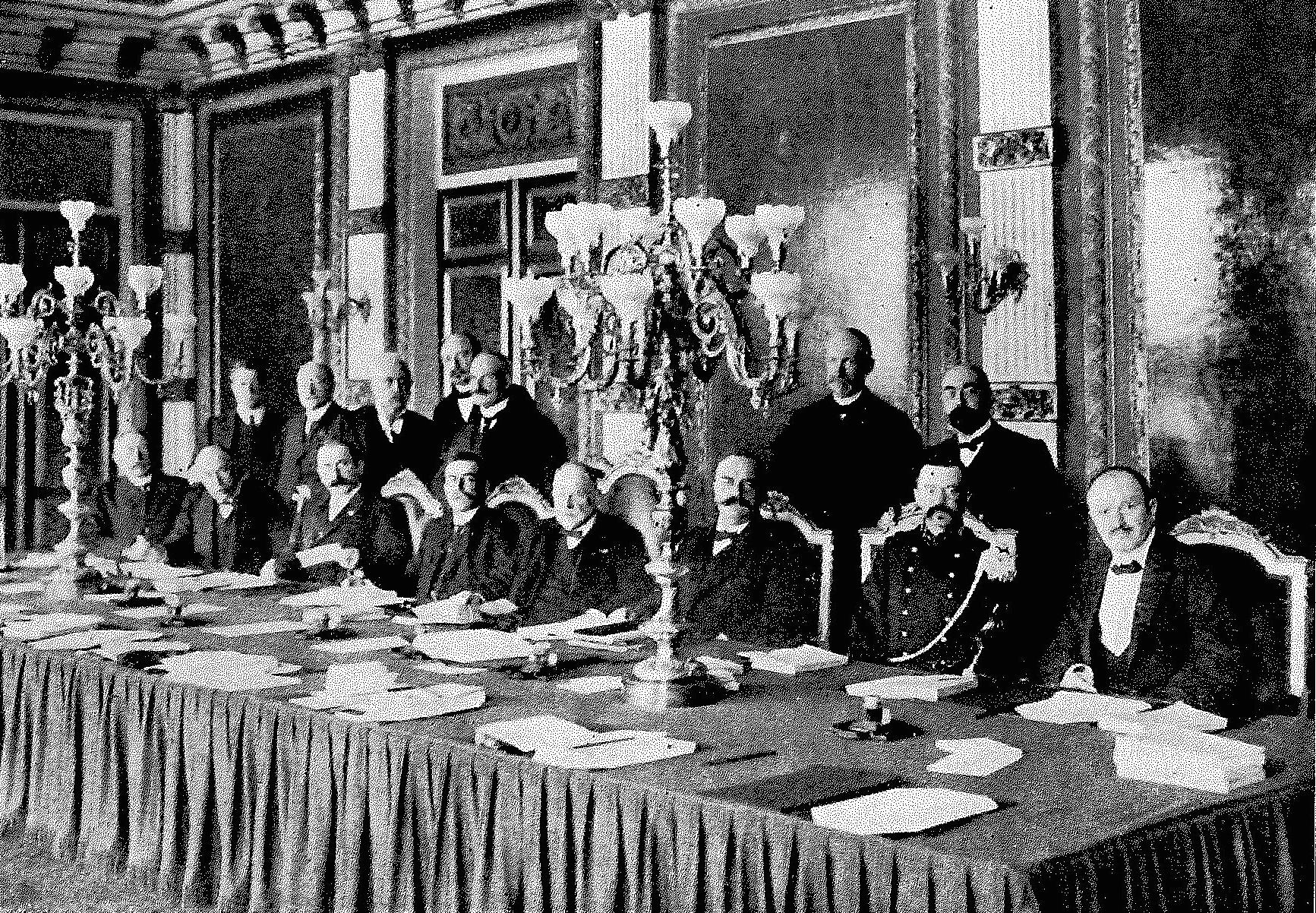
On 25 September 1912, FIP was formally constituted under Dutch law. The meeting was addressed by the Home Secretary of the Netherlands, Mr TL Heemskerk. Dr L van Itallie and Mr Hofman were elected President and General Secretary, respectively. The Government of the Netherlands gave a grant to the new federation to cover initial expenses. Read more on FIP’s history here. |
 |
Supporting the pharmacy profession
FIP is a non-governmental organisation in an official relationship with the World Health Organization (WHO). Through partnerships and extensive networks, we work to support the development of the pharmacy profession through strengthening primary health care, improving the responsible use of medicines, supporting more efficient and sustainable supply systems and ensuring that the health workforce is prepared to meet the evolving health needs of communities around the world.
Integrating practice, education and science
Molecules become medicines when pharmaceutical expertise is added. In turn, pharmacists — through ensuring responsible use — optimise the effects of these medicines. It is, therefore, essential that we focus our work around the three foundational pillars of practice, education and workforce, and science. These three pillars are interconnected drivers designed to transform global healthcare and pharmaceutical development.
 |
Practice: This pillar focuses on advancing patient care and pharmacy services in all healthcare settings. It emphasises evidence-based practice, optimal medication management, and patient safety. |
 |
Education and workforce: This pillar develops a competent, professionally educated pharmaceutical workforce (e.g., pharmacists, pharmaceutical scientists, pre-service students and pharmacy support workforce) for a diversity of settings to provide for their communities. It relies on needs-based strategies, continuous professional development and quality assurance frameworks for academic institutions. |
 |
Science: This pillar champions the research, development, and regulation of medicines and medical products. It drives innovation in pharmaceutical formulations, biotechnology and personalised medicine, while also focusing on global access to treatments. |
These pillars are integrated into the FIP Development Goals, which are a set of 21 milestones aimed at transforming the pharmacy profession and supporting the United Nations Sustainable Development Goals. Each of the goals contains elements addressing practice, education and science to build a high-quality pharmaceutical workforce worldwide.